
The Warning Signs Weren't Missing. They Were Scattered.
Why the future of behavioral threat assessment is connecting context — not predicting people.
Most serious incidents do not begin with one unmistakable warning.
They begin with fragments.
A teacher notices a sudden change in a student's behavior. A friend sees a disturbing message in a group chat. A colleague hears a grievance repeated with growing intensity. A family member knows about access to a weapon. A security officer notices someone repeatedly testing a restricted entrance.
Each observation may be ambiguous on its own.
The problem is that those observations often live with different people, in different systems, at different moments. Nobody has the whole picture.
After an incident, the pattern can appear obvious. Before an incident, it is usually scattered.
That is the real challenge behavioral threat assessment is trying to solve. Not mind reading. Not profiling. Not predicting who will become violent. The goal is to connect relevant information early enough for trained people to understand the context, determine whether a situation is escalating, and choose an appropriate intervention.
That distinction matters because the future of prevention will not be built around a system that claims to know what a person is thinking. It will be built around something more practical:
Threat assessment is not a "dangerous person detector"
One of the most persistent misconceptions about behavioral threat assessment is that it identifies a particular type of person.
It does not.
An FBI study of 63 active shooters found that they did not share a demographic profile that would have allowed them to be readily identified before an attack. The same study found that only 25% had a verified mental-illness diagnosis. Demographics and mental-health status, therefore, are not substitutes for a fact-based assessment of behavior and context.
What researchers did find was movement.
In cases where the timing could be determined, 77% of the subjects spent at least a week planning an attack, and 46% spent at least a week preparing for it. On average, each person displayed four to five concerning behaviors that were observable to others over time.
That is a radically different way to think about prevention. The useful question is not, "What kind of person looks dangerous?" It is:
That shift — from identity to trajectory — is the foundation of responsible threat assessment.
A warning sign is not a verdict
The phrase "warning signs" can be misleading because it implies there is a simple checklist. There is not.
Anger is not proof of violent intent. Social withdrawal is not proof. A disturbing drawing, heated argument, disciplinary problem, political view, mental-health condition, or interest in weapons is not automatically proof that someone presents a threat. Many people experience stress, conflict, rejection, humiliation, or emotional distress without ever becoming violent.
A responsible assessment looks for clusters, changes, context, and movement. Examples that may justify further inquiry include:
- A grievance becoming increasingly consuming or identity-defining.
- Repeated or escalating communications about harming a person, group, or institution.
- "Leakage," where someone reveals violent intentions, fantasies, plans, or attack-related thinking to another person or online.
- Research into a target, schedule, entrance, security procedure, or previous attacker.
- Movement from expression to preparation — acquiring means, rehearsing, creating a timeline, or testing access.
- A noticeable acceleration in concerning behavior, particularly when paired with a triggering event or perceived deadline.
None of these should be interpreted without context. Their value is not that they predict violence individually. Their value is that they can help a trained team determine whether behavior is progressing toward action.
The U.S. Secret Service's study of 67 averted school attack plots concluded that intervention opportunities were almost always available somewhere along the path toward an attack.
The real problem in 2026 is not adoption. It is orchestration.
Behavioral threat assessment is no longer an unfamiliar idea. A nationally representative 2025 survey of 1,746 public-school principals found that behavioral threat assessment and management had become nearly universal in U.S. public schools. A decade earlier, fewer than half of schools had comparable teams.
That sounds like the infrastructure is already in place. But the same research uncovered a more important story.
Fewer than half of schools provided annual training for threat-assessment team members. About half lacked formal policies or standard operating procedures. Fewer than 20% of schools used a formal case-management system to monitor interventions.

This reveals the next challenge. The future of behavioral threat assessment is not simply forming more teams. It is giving those teams a reliable way to collect information, assemble context, document decisions, coordinate interventions, and monitor whether the situation is improving.
Many organizations already possess the individual pieces: a tip line. A counseling department. Security cameras. Access-control records. Incident reports. A school resource officer. Human-resources records. A threat-assessment team.
But having all the pieces is not the same as having a system. A concern submitted through one channel may never be connected to an observation made somewhere else. A case may be discussed in a meeting but not tracked after it. A support plan may be created but never reviewed. An urgent physical event may be captured by a camera without reaching the team responsible for response.
The greatest safety gap may not be a lack of information. It may be a lack of connection.
Today's threat environment creates too much signal — and too little context
The volume of concerning information has also changed. Threats now arrive through social media posts, disappearing messages, group chats, anonymous accounts, reposted screenshots, gaming platforms, email, tip lines, and synthetic or manipulated content.
Recent RAND research found that most threats received by schools during the 2023–2024 and 2024–2025 school years were posted on social media. Fifty-one percent of middle-school principals and 40% of high-school principals reported that their schools had received at least one social-media threat.
Many online threats prove to be hoaxes, jokes, reposts, or attempts to disrupt a school day. But they cannot simply be ignored. A threat often has to be treated seriously until its credibility can be evaluated — consuming time, investigative resources, and attention even when it is ultimately found not to be credible.
That creates a difficult balance. React too slowly, and a genuine warning may be missed. React indiscriminately, and every angry post or irresponsible joke can trigger panic, punishment, lockdowns, and a loss of community trust.
The answer is not more suspicion. It is better triage. The smartest organizations will get better at separating:
- A concerning expression from movement toward action.
- A transient outburst from a sustained grievance.
- A repost from an original threat.
- A hoax from a credible plan.
- A person who needs support from a person who presents an immediate danger.
- An incident requiring counseling from one requiring emergency intervention.
That work requires judgment, context, and multidisciplinary expertise. Technology can assist the process. It should not make the final determination.
Pre-awareness is not predicting the future
The word pre-awareness could easily be misunderstood as a promise to know what someone will do before they do it. That is not the useful meaning. A more responsible definition is:
It does not claim certainty. It reduces delay. A well-designed early-awareness system should help an organization do four things.
Capture
One obvious, trusted way to report a concern — preserving what happened, when, where, what was said, and any evidence.
Connect
Related observations associated by incident, location, timing, and context — not converted into a secret "danger score" for an individual.
Route
Welfare concerns, urgent safety issues, visible weapons, and emergency threats reach the right people on the right path.
Support
A documented plan with counseling, family engagement, supervision, mental-health support, and follow-up over time.
Recent research emphasizes that effective management depends on tailoring interventions to a person's circumstances, addressing underlying causes, and monitoring progress — rather than relying primarily on suspension, expulsion, or arrest.
Technology's best role is therefore not to act as a judge. It should act as a memory, coordination, and awareness layer for the humans responsible for making difficult decisions.
Where cameras fit — and where they do not
A camera cannot understand a grievance. It cannot know whether an online statement was serious, sarcastic, copied, coerced, or taken out of context. It cannot diagnose a person's state of mind. And it should not attempt to infer violent intent from someone's clothing, facial expression, posture, identity, disability, or emotional presentation.
But a camera can contribute something behavioral threat-assessment teams often lack: immediate visual context when a risk becomes physically observable.
Detect the visible.
- See an overt event the moment it enters frame
- Confirm location, time, and live visual context
- Route an alert to the right people in under three seconds
- Watch every feed continuously, without fatigue
- Hand off evidence to responders cleanly
Judge the person.
- Read intent from a face, posture, or expression
- Diagnose mental health or emotional state
- Identify someone as "dangerous" by appearance
- Replace human assessment of context
- Decide who deserves intervention
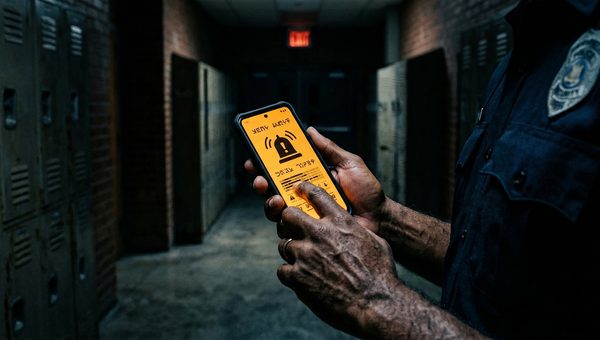
That is where Previzion fits within a broader prevention strategy. Behavioral threat assessment works upstream. It brings together human reports, concerning communications, changes in behavior, planning indicators, access, capability, support needs, and professional judgment.
Previzion adds a real-time visual-awareness layer when an event becomes visible in the physical environment — for example, when a visible or visually apparent weapon enters a camera's field of view, or an escalating incident occurs. The platform integrates with existing IP cameras, sends alerts in under three seconds, attaches location and live-camera context, and uses a privacy-first architecture with no facial-recognition databases and no student profiling.
That is an important boundary. Previzion does not need to claim that it knows who is dangerous. Its value is helping the right people know sooner when something observable requires immediate attention.
The stronger safety architecture is layered:
- People notice early.
- Reporting systems capture the concern.
- Multidisciplinary teams assess the context.
- Support systems intervene.
- Real-time visual awareness detects an overt event.
- Response protocols help people act.
No single layer replaces the others. Together, they reduce the chance that a critical signal will remain isolated.
A smarter readiness test
Organizations do not need to begin with a massive technology overhaul. They can begin by asking six practical questions.
Can someone report a concern in less than a minute?
Students, employees, families, visitors, and staff should know exactly where to go. Reporting channels should be visible, simple, accessible, and clear about when anonymity is available.
Have people been taught what to report?
Training should focus on observable behavior and context — not appearance, identity, diagnosis, political beliefs, or stereotypes. "Something about that person makes me uncomfortable" is not enough. "This person described a target, timeline, and access plan" is.
Does a multidisciplinary team review serious concerns?
The strongest teams draw from multiple perspectives: leadership, security, counseling, education or operations, HR where relevant, and law enforcement when circumstances require it. Research supports multidisciplinary teams, structured decision criteria, and consistent processes as foundations for fairer assessments.
Does every assessment produce an action plan?
A label such as "low," "medium," or "high" risk is not a management strategy. Someone must own the next steps, define what improvement looks like, set review dates, and confirm that agreed interventions actually occurred.
Can the organization move from information to physical awareness?
When an issue becomes visible on site, the response team should receive location, time, and visual context quickly. A camera alert that sits in a separate system from emergency procedures is not a complete response capability.
Can leaders explain and audit their decisions?
Organizations should be able to explain why a case was escalated, what information was considered, who had access to it, how long it was retained, what support was offered, and whether outcomes differ unfairly across groups.
Privacy and fairness are not obstacles to good threat assessment. They are evidence that the process is mature.
The future is not more surveillance. It is better shared awareness.
The next generation of safety will not be defined by how much information an organization collects. It will be defined by whether the organization can use the right information responsibly.
That means resisting two equally dangerous instincts. The first is to dismiss weak signals because none of them appears definitive. The second is to treat every unusual behavior as evidence that someone is dangerous.
Smart prevention lives between those extremes. It gathers facts. It looks for movement rather than stereotypes. It brings multiple disciplines into the decision. It intervenes proportionately. It supports people before situations escalate. And when a danger becomes visible, it helps the right people act without unnecessary delay.
The warning signs are not always invisible. Sometimes they are simply separated by departments, platforms, cameras, conversations, and time.
The future of behavioral threat assessment is not predicting people. It is connecting context.
And the strongest definition of pre-awareness may be the simplest: